domingo, 2 de enero de 2011

El fuego como herramienta / Using fire as a tool

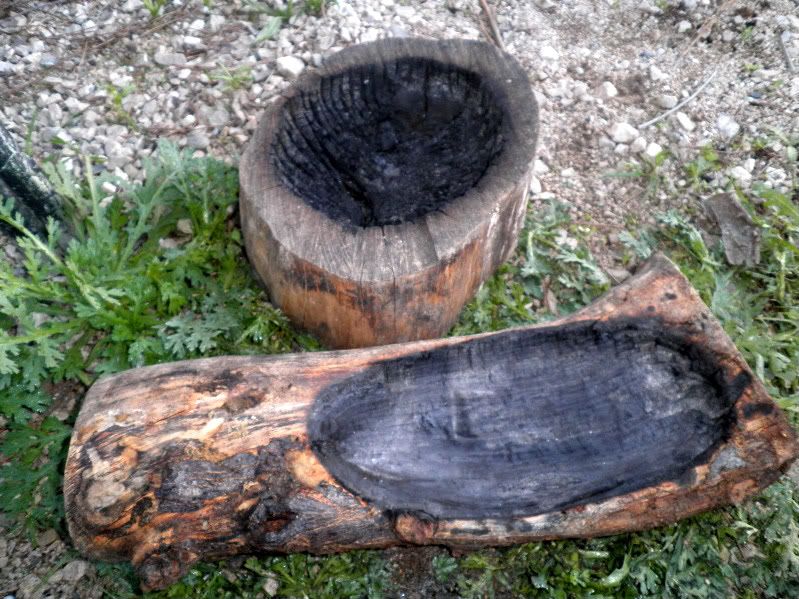
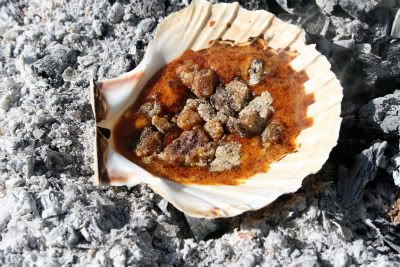
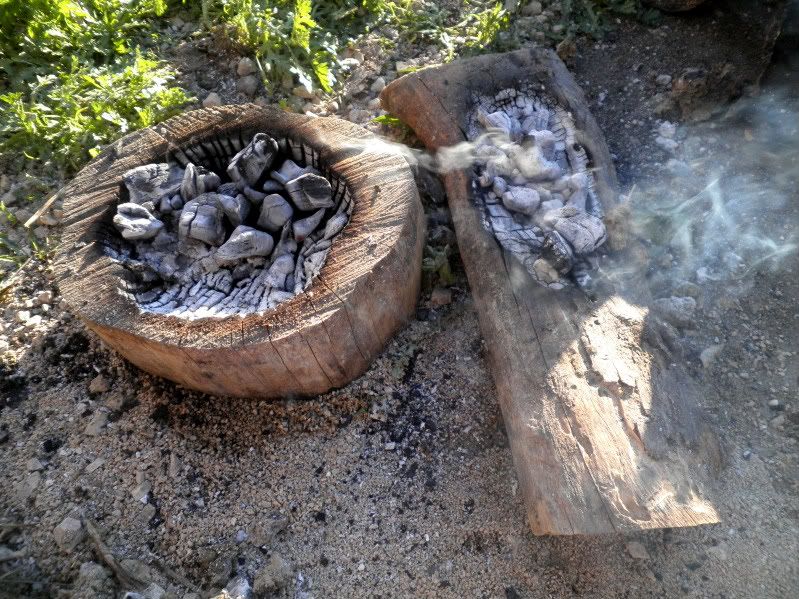
El fuego puede ser usado, entre otras cosas como una herramienta; nos puede ayudar a realizar un trabajo. O al menos, lo podemos usar para que una tarea nos resulte más fácil. Como ejemplo, me gustaría mostrar estas fotos, en las que usando brasas de una hoguera logré hacer un rebaje en unas piezas de madera para usarlas como cuencos o morteros, tarea que, de haber tenido que realizar sin herramientas modernas, habría resultado muy penosa

Fire can be used as a tool, too; it can help us to make a job. Or at least, we can use it to make this job easier. As an example, i´d like to show you this pics in which you can see how using coals in some pieces of wood to make a mortar or a bowl. Without the help of fire,and with no modern tools, this job would have been quite hard 
.
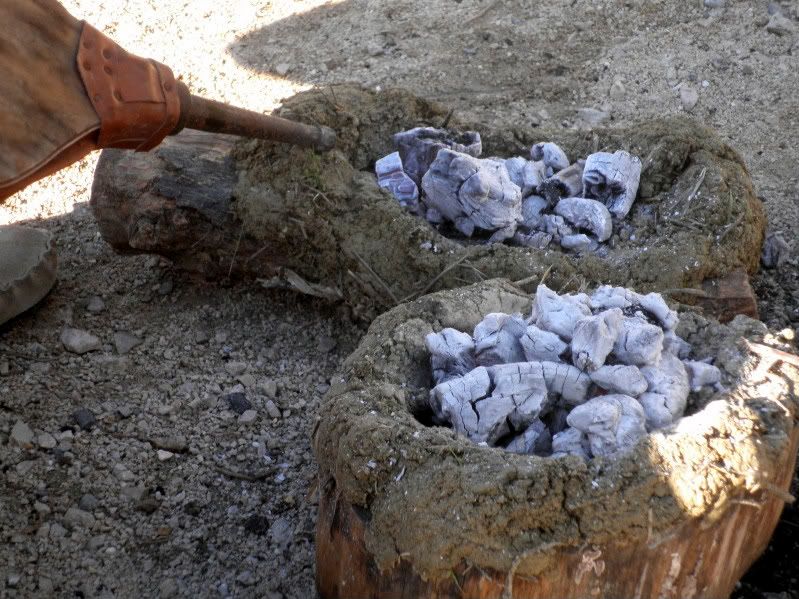
Usando barro para controlar las zonas donde no queremos que el fuego actue
Mud can be used to avoid the coals to get to close to the border


Una vez que hemos obtenido lo que queríamos usando el fuego, podemos proceder a terminar. Usando una piedra rota podemos deshacernos de la parte quemada, como con esta otra pieza de madera, destinada a ser un mortero...
Once we get what we wanted using fire, we can finish the job. Just using a broken stone to get rid of the burned parts, like is shown in next picture with this other piece of wood, wich eventually will became a mortar
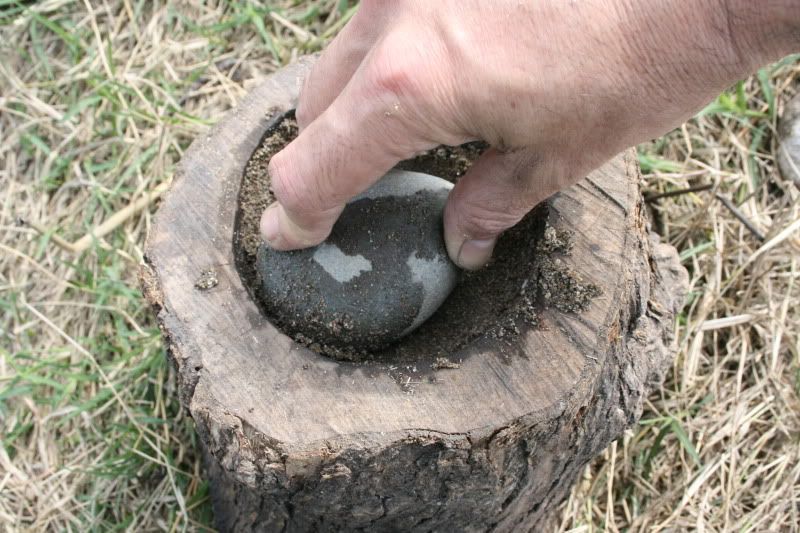
Con arena y un canto rodado, lijamos el interior
Using sand and a cobble to "polish" the interior
para obtener un mortero
to get, then, a mortar


lunes, 20 de diciembre de 2010

Cómo hacer cuerda / How to make a string

Un corto video acerca de cómo hago mis cuerdas. No es ni el único método ni el mejor, simplemente es al que estoy acostumbrado.

A short video on rope making. This is not the only way to do it nor the best one, it´s just the way i´m used to.

sábado, 30 de octubre de 2010

Arte primitivo / Primitive art

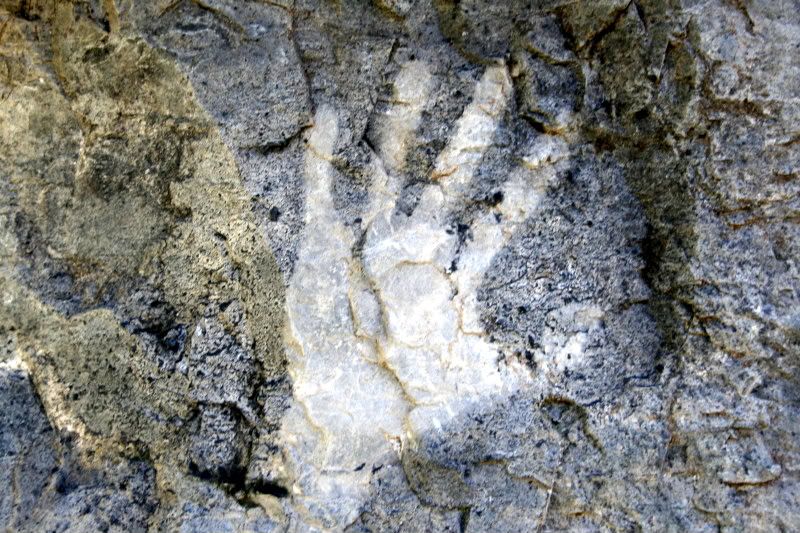
El verano pasado, mientras pasábamos unos días de vacaciones, quise probar a hacer una pequeña prueba; machaqué, lo más finamente posible. restos de carbón de una hoguera  y lo mezclé con agua. Después, busqué una pared de piedra, coloqué mi mano sobre ella y, con  la mezcla de carbón y agua en la boca, soplé sobre mi mano, procurando que la mezcla saliera bien dispersa. Aquí podéis ver el resultado. No del todo mal para ser la primera vez.

Last summer, while having some days off, i tried to test something i´ve got in my head for a while; i mixed fine crushed charcoal with water. Then i looked for a stone wall, i set my hand there and with some of the mix in my mouth, i blew over it, trying to get a good spray effect. This is the result. Not too bad...


Puntas de lanza, azagaya y flechas / Spear, atlatl dart and arrows points

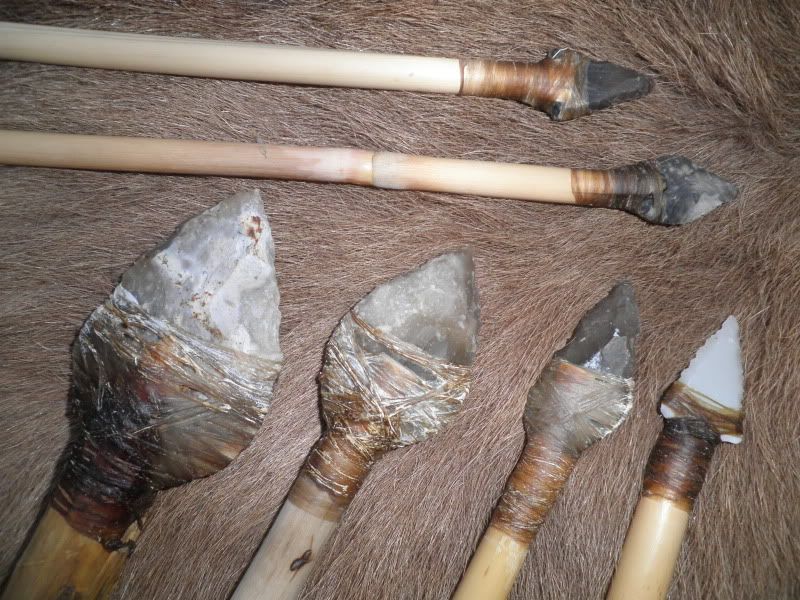
Unas cuantas puntas que hice la última vez que estuve en Normandía y que enmangué hace unos días ya. Estoy especialmente orgulloso de la lanza, de más de dos metros de largo y con ese aspecto crudo que me encanta. he usado sólo tripa de cabra.

Some flint points i made in my last vivit to Normandy, hafted some days ago. I feel quite proud of the big spear; two meters long and quite rough look that i love. I used just goat gut to haft them.


Cuchillo de sílex / Flint knife

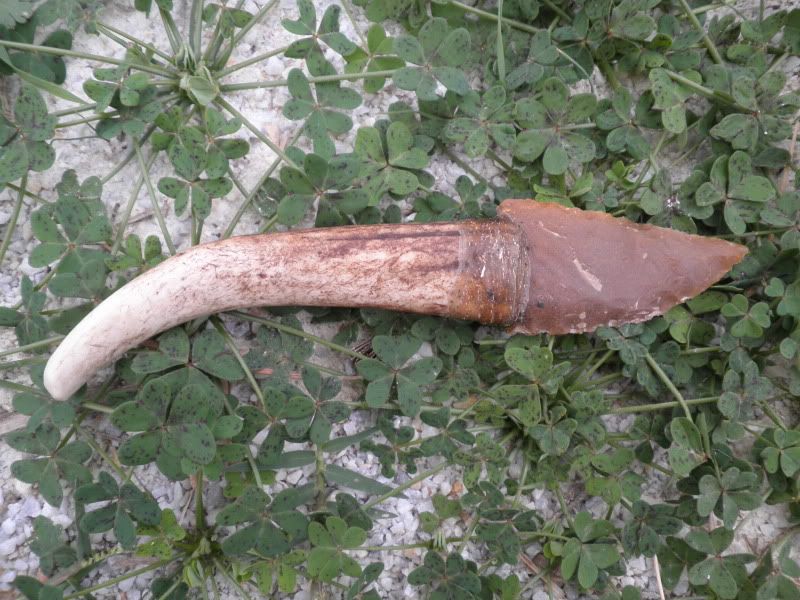
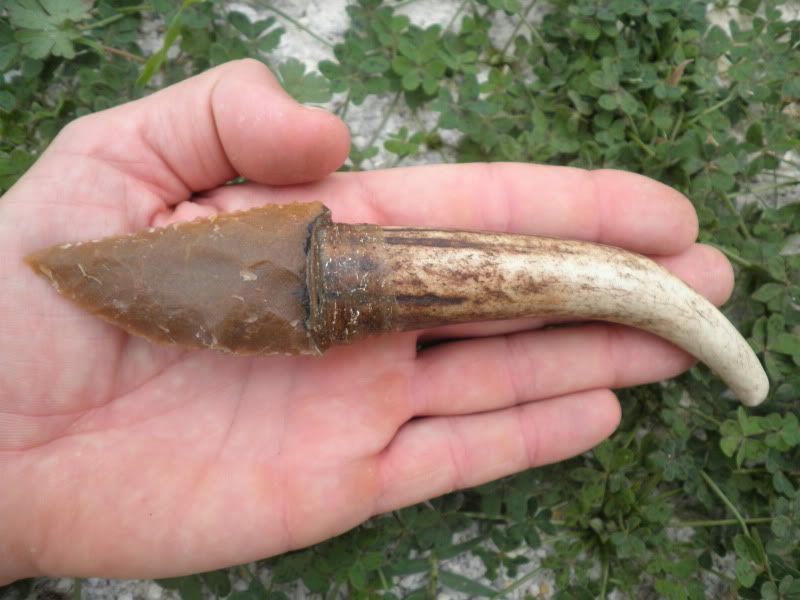
Ayer terminé esta hoja de sílex, que he enmangado en asta de ciervo usando pegamento de resina de pino y tripa de cabra.

Yesterday, i finished this flint blade, which i hafted in deer antler using pine pitch glue and goat gut.

miércoles, 13 de octubre de 2010

Palo de escavar / Digging stick


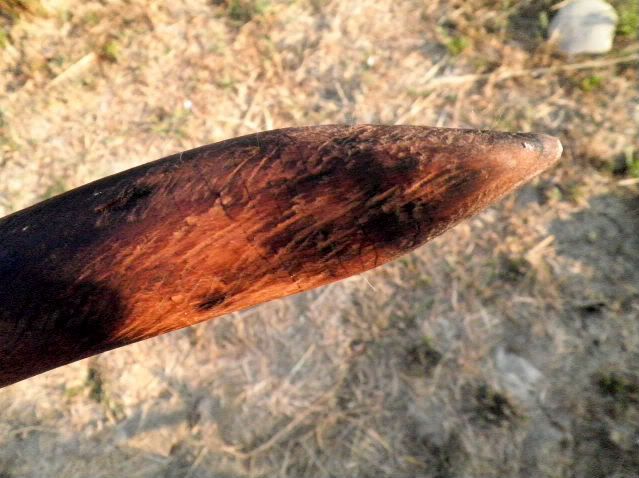
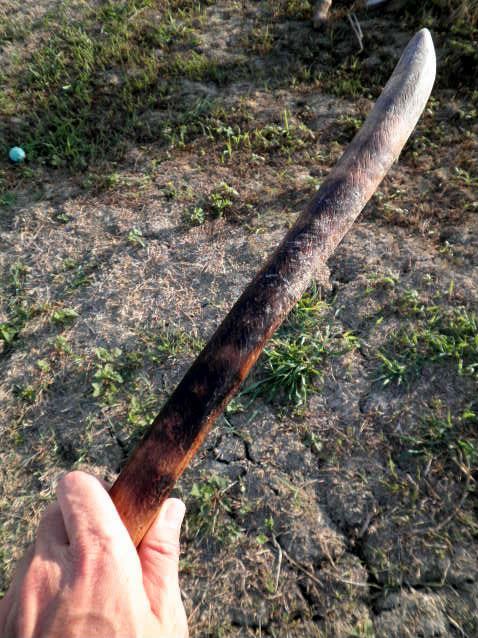
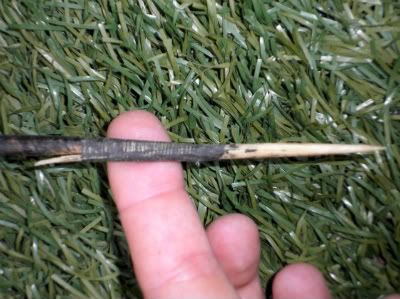
Esta es una herramienta básica usada desde antaño en diferentes partes del planeta. No es más que un palo afilado en su extremo, que se usa para extraer raices, o para buscar larvas, insectos o roedores (y en estos menesteres, el palo tiene la ventaja sobre el cuchillo de que no daña lo que quieres obtener) para hacer boquetes en el suelo (para preparar tampas o para preparar un fuego, por ejemplo) o para desenterrar cualquier otra cosa. En realidad, el palo de escarbar se puede improvisar fácilmente cuando hace falta, pero yo he decidido hacerme uno (con una rama de olivo, tostado al fuego para endurezerlo y terminado con cera de abeja) que además, me sirve como palo para caminar y  de defensa-ahuyenta perros.


This is a very basic tool used since very early and in differnts parts of the planet. It´s just a stick with a, somehow, sharp end, used to get roots, insects, small rodents, etc ( and for these tasks the stick is better than a knife as this could damage what we want to dig). It ´s also good to make holesin the ground To prepare a trap or a fire bed or to dig anything else. Actually, the digging stick can be improvise when you need it, but i wanted to make one to keep it (made ot of an olive tree branch, heated with fire and coated with beewax) and used as a walking stick and a keepawayangrydogs-stick too.


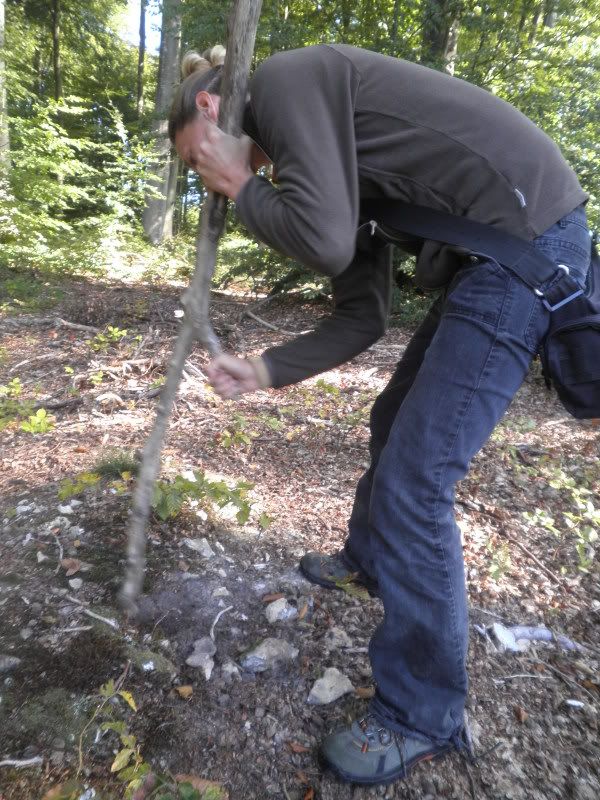
Usando un palo de escarvar improvisado para desenterrar sílex en los bosques de Normandía.
Using an improvise digging stick to get flint in one of Normandy´s forests.


lunes, 30 de agosto de 2010

Cuando no hay piedra tallable disponible / When there is not knappable stone around

Son muchas las culturas y pueblos que, obligados por la escasez de piedra tallable, han usado otros materiales, como hueso, conchas y diferentes tipos de madera.
Una opción sería hacer algo parecido a lo que hacen los yanomami, usar un hueso alargado para obtener una punta para sus arpones y flechas.

Auténtica punta de arpón yanomami (propiedad de mi amigo José Ogalla). Obsérvese la parte trasera del hueso colocado de manera tal que forma la parte que impedirá que la presa se desprenda del arpón.
Real yanomami harpoon point (owned by my friend josé Ogalla). Check out the bone´s rear end, placed in such a way that it will avoid to get out of the fish or animal. 

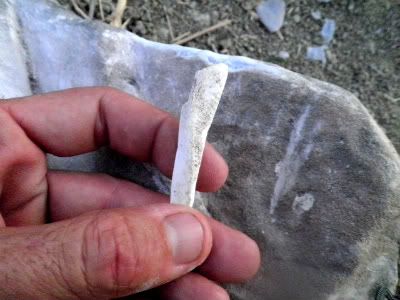
Trabajando un trozo de hueso, con una forma similar a lo que busco,  contra una piedra porosa...
Working on a piece of bone with the right shape, against a porous stone...

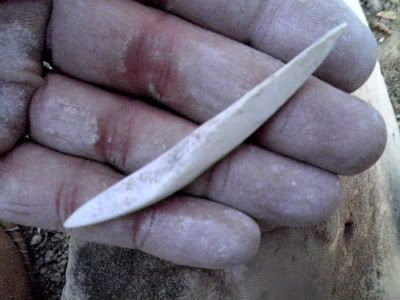
Se obtiene algo que puede servir para nuestra punta de proyectil.
We get something that could be our projectile point.

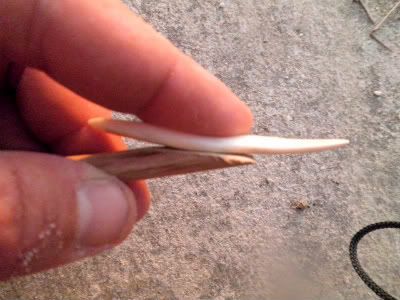
La punta de nuestro astil tiene que tener el ángulo adecuado.
The shaft has to be shaped in the right angle.

Lo pego con resina de pino.
Sticking it using pine pitch glue.

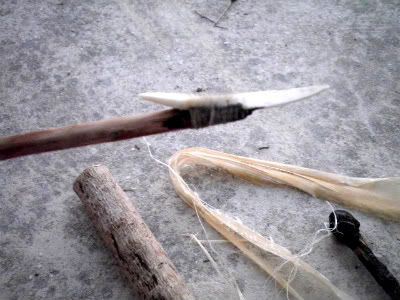
...y lo ato con tendón de ciervo,
...and i tied it using deer sinew.

Y la punta  de inspiración yanomami está terminada. Me gusta ver cómo diferentes soluciones se dan para un mismo problema en diferentes partes del mundo, usando lo que se tiene a mano.
And the yanomami inspired point is finished. I like to see how different solutions have been found for the same problem in diferent parts of the world, using whatever the material is at hand

viernes, 27 de agosto de 2010

Más fibra vegetal para cuerdas / More plants fiber for cordage

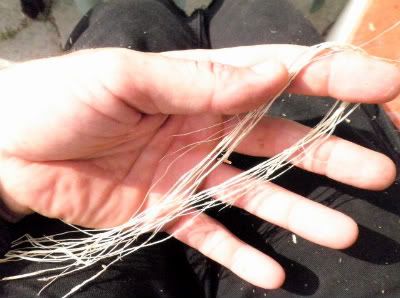
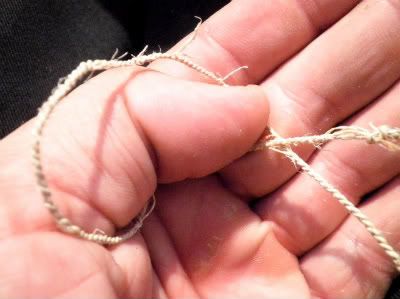
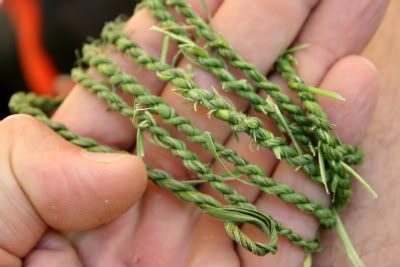
Creo que se le dá, por lo general, poca importancia a la habilidad de hacer cuerdas a hechas de fibras naturales, a pesar de que a partir de dominar esta habilidad, se pueden obtener otras de mucha importancia, como la construcción de refugios, confección de ropa y calzado, obtención de fuego por fricción con arco (para la cuerda), cestería,  hilo para pescar o confeccionar trampas, para transportar material, etc...En fin, creo que es algo que puede resultar muy útil si nos gusta salir a la naturaleza. Últimamente he probado con tres diferentes plantas que me han dado muy buen resultado; la primera de ellas fué la raíz de pino, que trás golpear con un palo y obtener fibras finas y alargadas que se pueden convertir en buena cuerda.

I find that, often, we don´t give much relevance to natural cord making skill, being this, one of those skills necessary to get others like refuge making, fire by friction with bow, to make baskets, to fish or trap, to carry items, for clothes or shoes, etc. I think is something that can be very usefull to know if you like going  outdoors. Lately i´ve tried three different plants with very good results; first one was pine tree root; after pounding it, you get some thin and long fibers that can be then turn into quite fine cordage.


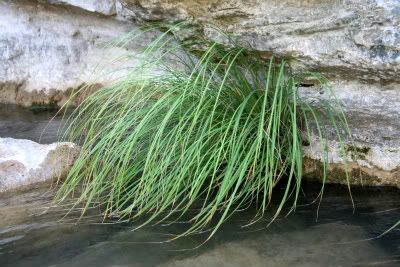
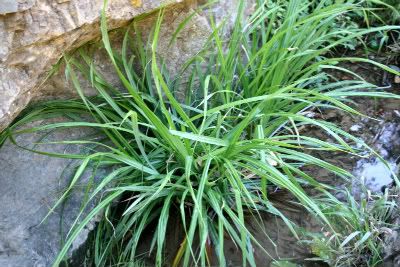
Las otras dos plantas son muy parecidas entre sí, pero creo que se tratan de diferentes especies, de las que desconozco el nombre. Son plantas que encontré cerca de un río y de las que obtuve también una cuerda bastante interesante...La primera de ellas tenía hojas más cortas y finas y crecían separadas unas de otras.

The other two plants are quite similar, but still i think they are not the same plant. I don´t know their name, though. They grow near the river and i made some nice cordage with them...The first of them has shorter and thinner leaves and they grow separated from each other.


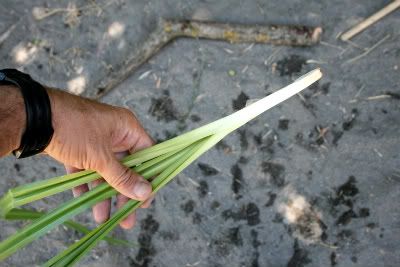
La otra planta, si bien era similar, sus hojas eran más largas y anchas y crecían en tallos...
The other plant is similar, but its leaves grow longer, widther and in stems...


Sólo decir que hacer cuerdas con fibras naturales es, de alguna forma, adictivo, además de muy gratificante.
Finally i´d like to say that making cordage with natural material is quite adictive and very gratifying.

Cumpleaños del blog / Blog´s birthday

El mes pasado se ha cumplido un año desde que empecé el blog, mientras me aburría en cama tras una operación. Bien es cierto que lo mantengo de forma bastante irregular, con algunas entradas en un mismo mes, para luego apenas publicar nada, pero bueno, tampoco me propuse hacer el blog con mayor número de entradas de la red. Y aún así ya se han superado las 5.000 visitas, y eso que el contador de visitas no se instaló desde el principio, sino algunos meses más tarde. Así que tengo que agradeceros a todos los visitantes, y muy especialmente a los seguidores del blog, el estar ahí. Es agradable saber que lo que haces tiene, de una u otra forma, un seguimiento.
Os recuerdo, también, que se puso en marcha PaleoForo, un sitio donde poder intercambiar impresiones y experiencias relacionadas con la arqueología experimental, la tecnología primitiva, la arqueología, etc. en español. Si os apetece, podéis asomar por allí. Sereis bienvenidos. http://paleoforo.foroes.net/
Espero poder seguir publicando entradas y espero ir mejorando la calidad de estas en el próximo año, y ojalá esteis ahí para leerlas y opinar, si os parece bien.
Gracias.

It was this blog´s birthday last mounth. A year since a decided to create it while bored while recovering in bed. I know i´m not keeping it as active as i should, but i didn´t pretend to have the most active blog in the net. And still, more than 5000 visits (since i set up the counter, mounths after starting the blog) is not that bad. So thank you very much for being there now and then. It´s nice to know that what you do is, somehow, followed...
I´ll try to keep the blog updated and keep trying to make it better, so opfully you will poping up now and then, at least till next birthday.
Thank you.

domingo, 27 de junio de 2010

Piel de serpiente / Snake skin


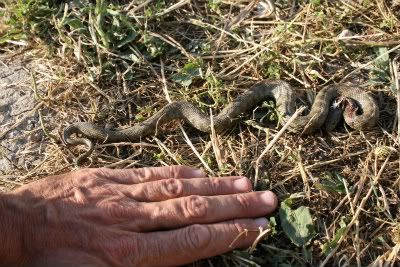
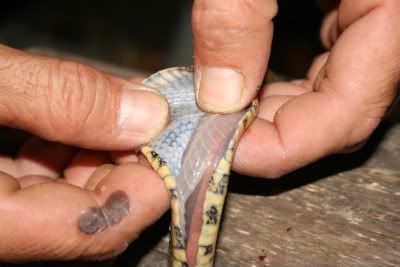
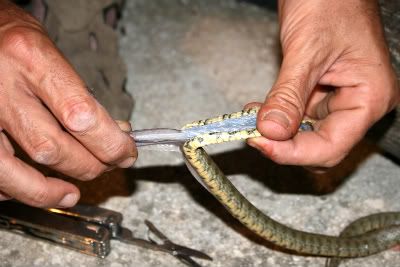
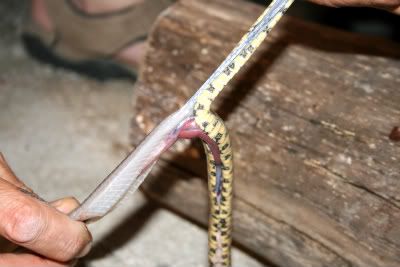
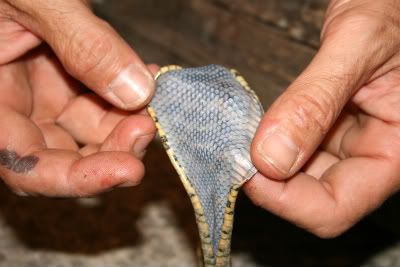
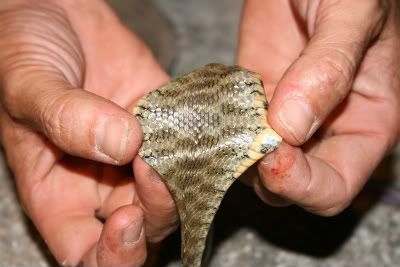
Nuestro gato es muy buen cazador. Habitualmente, nos trae a casa sus capturas; ratones, ratas, ranas, etc. Hace ya unos días, nos trajo una pequeña culebra. La verdad es que me fastidió bastante, ya que me gustan estos reptiles, pero tampoco podemos hacer nada para evitar que el gato sigua su instinto. El caso es que no se comió la culebra (como hace con los roedores) y, ya que estaba muerta, decidí tratar de aprovechar la piel. Los nativos americanos utilizaban la piel de estos reptiles para sus arcos.
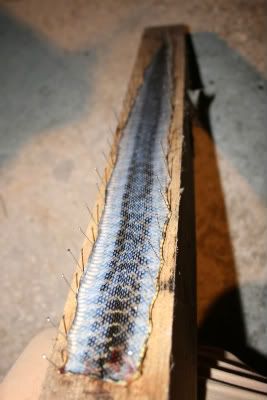
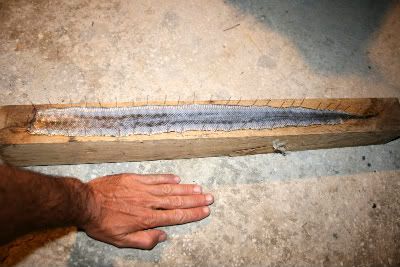
Era la primera vez que hacía algo así, por lo que utilicé una multiherramientas, en vez de algún útil primitivo. La verdad es que el proceso fué más fácil de lo que pensaba. Empecé abriendo desde el recto hacia arriba y separando la piel de la carne (bastante limpia y apetecible, la verdad). Una vez obtuve toda la piel, la limpié con agua y la clavé por sus bordes a una tabla para su secado. Igual puedo aprovecharla para forrar un propulsor. He colgado muchas más fotos aquí: http://paleoforo.foroes.net/curtido-y-vestimenta-f20/despellajar-una-culebra-t211.htm.


Our cat is a very good hunter. Usually, he brings home all his captures: mouses, rats, frogs, etc. A few days ago, he brought a little snake. A shame, ´cause a do like this animals, but i cant help him to refain his instintc. The thing is that he didnt eat the snake, and, since it was already dead, i decided to try to get the skin. Native americans used to get them for their bows.
It was my first attampt to do something like this, so i used a modern multitool, instead of a primitive one. Actually the process was quite simple: i started opening the snake from its rectum all the way up and separeting the skin from the flesh (quite clean and appetizing, actually). Once i get it, i washed it in fresh water and then i nailed it to a board. I may be able to use it on an atlatl. There is some more pics here: http://paleoforo.foroes.net/curtido-y-vestimenta-f20/despellajar-una-culebra-t211.htm.


Pegamento de resina de pino / Pine pitch glue

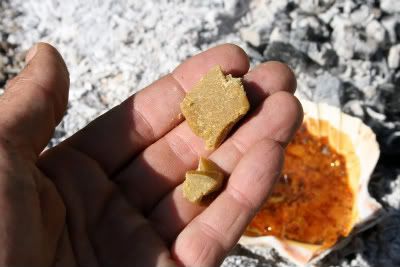
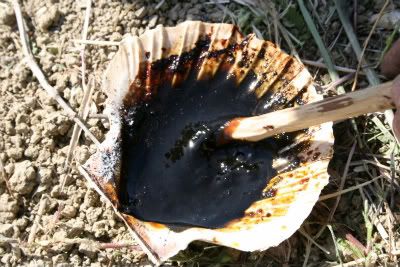
La naturaleza nos provee de casi todo lo que necesitamos. Cuando uno depende única y exclusivamente de lo que encuentra en la naturaleza, se agudiza el ingenio. Así, usando productos naturales, se puede hacer pegamento para unir piedra (o hueso) y madera, para enmangar flechas, azagayas, cuchillos, etc. Uno de los pegamentos más usados, era el basado en la resina de pino. Hay que fundir la resina tratando de evitar las impurezas (restos de corteza) y evitando que llegue a bullir, lo que haríaque la mezcla final sea quebradiza.

We can get almost anything we need from nature. When one depends just on what can be found on it, your wittiness get sharp. So, usaing natural stuff, you can make glue for halfting stone (or bone) on wood (for arrows, darts, knives, etc). One of this glues is the pine pitch glue. The pine resin has to be meltted (trying to avoid any impurity) and making sure it doesn´t boil, so the final mixture doesn´t became brittle.


A continuación, se le añade cera de abeja, para darle un poco de maleabilidad a la mezcla final.

Next, some beewax has to be added to get a malleable mixture


Y se le añade también restos de carbón bien triturado, ya fuera del calor, hasta obtener una mezcla consistente.

And some charcoal is added too, once you get the mix out of the heat, till you get a consistent mixture.


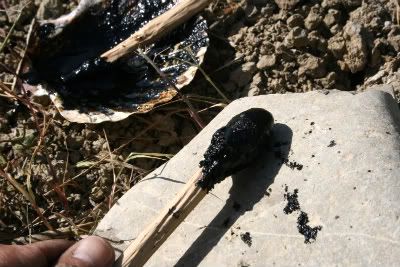
A medida que la mezcla se va enfriando, se le vá enrollando a un palo.

So, as the mixture gets cold, you roll it around a stick.


Una vez tenemos todo nuestro pegamento en los palos, tendremos nuestro pegamento listo para ser usado cuando lo necesitemos. Paa usarlo, sólo tendremos que calentar lo que creamos que vamos a necesitar y guardar el resto.

Once all the pitch is aroun the stick, we´ll have our glue rady to be used as we need it. We just have to heat the portion we need and keep the rest.


Creo que es una forma muy ingeniosa de aprovechar los recursos naturales. Una última cosa: la resina es muy inflamable, así que hay que evitar que las llamas la alcancen. En realidad, sería mejor utilizar brasas más que llamas.

I find it such a clever way to use natural resources. One last thing: pine resine is very flammable; you have to avoid the flames reaching it, so its better to use coals rather than fire to heat it.

Azuela / Azde


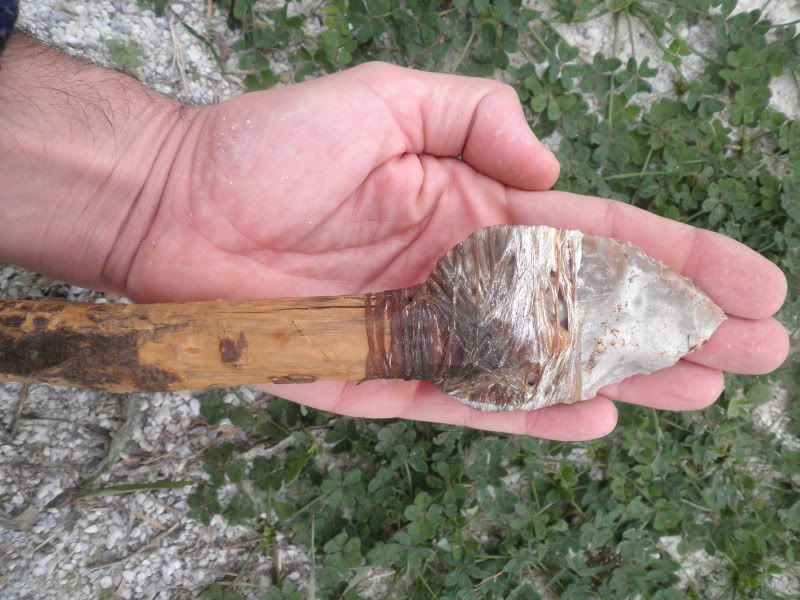
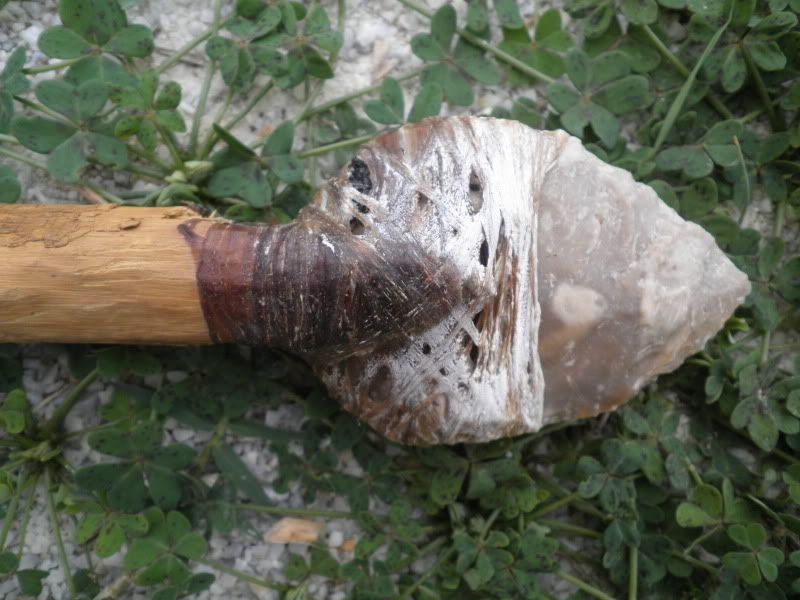
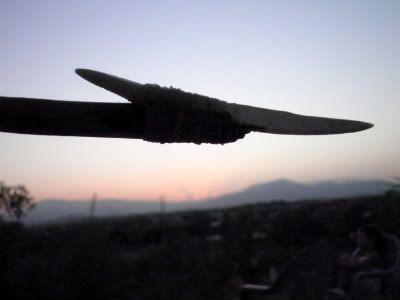
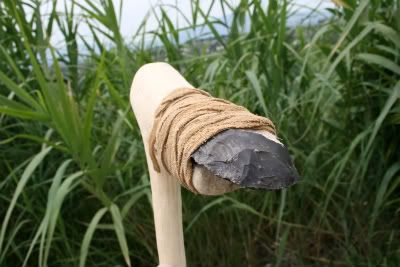
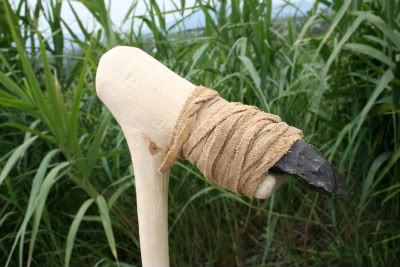
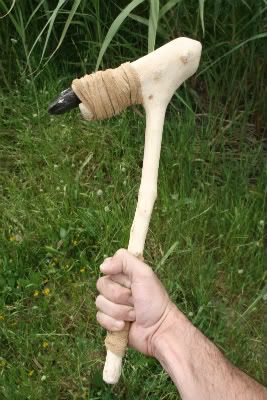
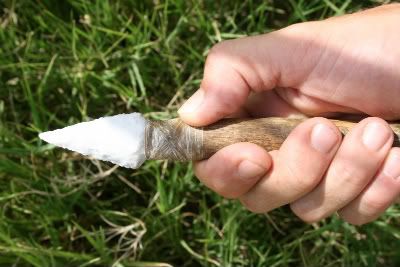
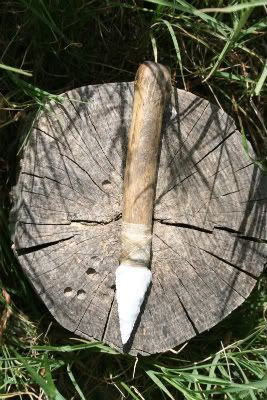
Hace unas semanas, trataba de obtener una hoja para un cuchillo, pero finalmente, y dado que no soy buen tallador, me salió esto: una hoja para una azuela, una herramienta para trabajar la madera. Así que me busque un mango de acebuche donde acoplar la hoja y la até con una tira de cuero.

A few weeks go, i was trying to get a flint knife blade , but because i´m not a good flintknapper, i got this: a azde blade, a tool for wood working. So i seek for the right handle and i tied it using a leather strip.

lunes, 14 de junio de 2010

Pequeño cesto / Small basket

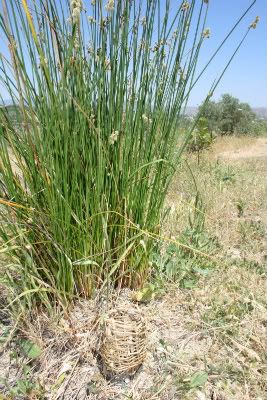
Cortamos algunas plantas para hacer el huerto hace semanas. decidí guardar algunas de ellas para secarlas y tratar de darles algún uso. esta me pareció interesante. así que una vez seca, la metí en agua por una semana, más o menos..

We cut some plants to make our veg garden. I decided to keep some of them, to dry them and try to give them some use. I found this one interesting, so once it was dry, i let soak in water for a week or so,..

Empecé a "tejerla" como había visto en algún sitio, aunque no tenía demasiado claro cómo continuarla, así que improvisé sobre la marcha

I started following some pictures i saw somewhere on the net, but i wasn´t sure about how to keep going, so i just kept going to see what i could make


Al final obtuve algo que no estaba tan mal; práctico para llevar algo ligero, si se le añadía a la pequeña cesta una cuerda.

Finally, i got something not too bad; usefull if you had to carry something light, once you add a cord to the basket


viernes, 11 de junio de 2010

Cuchillo de piedra / Stone knife

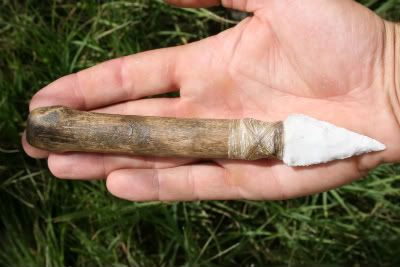
Hace ya unos días, logré hacer mi primer cuchillo de piedra. Una hoja de novaculita (más gruesa de lo que debería ser...) enmangada en acebuche usando pegamento de resina de pino y tripa. No es el mejor cuchillo del mundo, pero me gusta.

A few days ago i made my first stone knife. A novaculite blade ( thicker than it should be...)  on a wild olive tree handle, with pine pitch and guts to hold it. Not the best knife, but i like it.