lunes, 14 de junio de 2010

Pequeño cesto / Small basket

Cortamos algunas plantas para hacer el huerto hace semanas. decidí guardar algunas de ellas para secarlas y tratar de darles algún uso. esta me pareció interesante. así que una vez seca, la metí en agua por una semana, más o menos..

We cut some plants to make our veg garden. I decided to keep some of them, to dry them and try to give them some use. I found this one interesting, so once it was dry, i let soak in water for a week or so,..
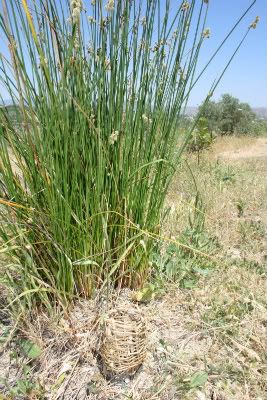
Empecé a "tejerla" como había visto en algún sitio, aunque no tenía demasiado claro cómo continuarla, así que improvisé sobre la marcha

I started following some pictures i saw somewhere on the net, but i wasn´t sure about how to keep going, so i just kept going to see what i could make


Al final obtuve algo que no estaba tan mal; práctico para llevar algo ligero, si se le añadía a la pequeña cesta una cuerda.

Finally, i got something not too bad; usefull if you had to carry something light, once you add a cord to the basket


viernes, 11 de junio de 2010

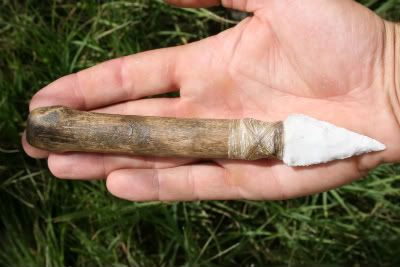
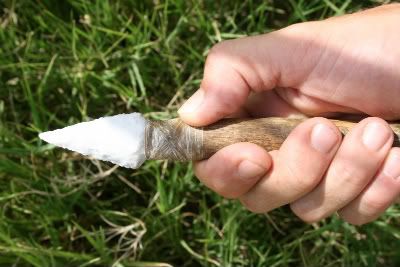
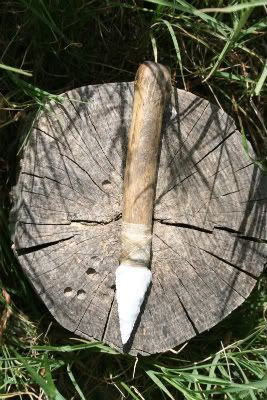
Cuchillo de piedra / Stone knife

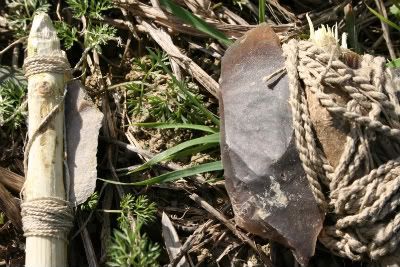
Hace ya unos días, logré hacer mi primer cuchillo de piedra. Una hoja de novaculita (más gruesa de lo que debería ser...) enmangada en acebuche usando pegamento de resina de pino y tripa. No es el mejor cuchillo del mundo, pero me gusta.

A few days ago i made my first stone knife. A novaculite blade ( thicker than it should be...)  on a wild olive tree handle, with pine pitch and guts to hold it. Not the best knife, but i like it.


lunes, 17 de mayo de 2010

PaleoForo. Nuevo Foro Primitivo en español / PaleoForo. A new forum in spanish

Últimamente no estoy haciendo demasiadas cosas que pueda publicar aquí. Espero encntrar algo de tiempo libre para ponerme manos a la obra.
Mientras tanto, os dejo el enlace a un nuevo foro: www.paleoforo.com que trata de todo lo relacionado con lo primitivo; evolución, tecnicas primitivas, arqueología, arte, supervivencia primitiva, etc...

I´m not doing much, lately. Hope i´ll find some free time to get into it, and make some new stuff.  Meanwhile, i let you know about this new forum (in spanish, sorry) www.paleoforo.com about primitive stuff: evolution, primitive technology, art, primitive survival, etc...

domingo, 4 de abril de 2010

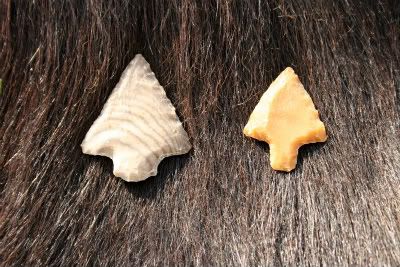
Puntas de flecha / Arrowpoints

Tallar piedra es un  arte. Me resullta  facinante el que  en un mundo  donde la  única materia prima era lo que podías  obtener  directamente   de   la  naturaleza,   nuestros  antepasados se  las  apañaran  para  sobrevivir adaptándose sólo con eso: piedras, madera, y lo obtenido de  la  caza y la carroña (huesos, pieles, tendones, grasa, plumas, etc) y lo que empezó como una tosca herramienta,  un  filo  cortante de una piedra fracturada, se convirtió, con el paso de miles de años, en algo refinado y bello....
Tallar piedra es un arte. Y yo  no  soy un artista. Sólo estoy empezando y  tengo un largo camino de piedras que romper. Las puntas  de  flecha que muestro,  es material reciclado de unas de esas piedras que empiezo a golpear, a partir. De unas de esas pequeñas lascas y usando un asta de ciervo para perfilarlas y retocarlas, surgió esas puntas.
Aunque si quieres ver arte lítico, te recomiendo este blog entre otras muchas páginas: http://nehawkaprimitiveskills.blogspot.com/ . Después de verlo, coincidirás conmigo: Tallar piedra es un arte.

Flintknapping is  art. I  find  fascinating that  in a world where all you could use as raw  material was what you could get  from nature, ours ancestors managed to survive just with stones, wood and what they could use from their game or found carrion (bones, skins, sinew, fat, feathers...) First, they made sharp simple tools breaking  a  stone, but they ended up creating something refined and beautifull.
Flintknapping is  art.  And i´m  no  artist. I´m  a  beginner  and i´ve got a long way to go, a path with plenty of stones  to  break. The point  i show are just recycled material from some of those stones i´m starting to hit. I used a cople of small flakes and a deer´s antler as a pressure flaker to  finish  them.
If you´d like to see some lithic art, then you must have a look to this blog http://nehawkaprimitiveskills.blogspot.com/ and then you´ll agree with me. Flintknnaping is art.

sábado, 3 de abril de 2010

Útiles de hueso / Bone tools


Para los pueblos primitivos, la caza significa mucho más que la forma de obtener comida. Del animal abatido se obtenía, además de alimento, mucho material para la vida cotidiana: pieles, grasa, tendones y tripas, sangre y huesos. Multitud de objetos se fabricaban usando huesos de animal: puntas (para flechas, azagayas y lanzas), raspadores, percutores y retocadores (para la talla lítica), anzuelos y arpones, punzones, adornos...
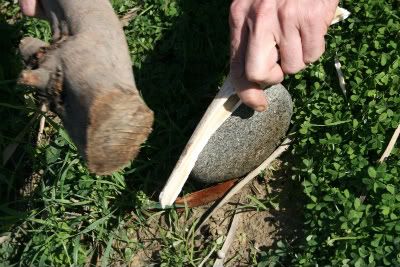
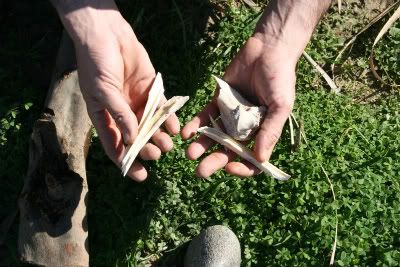
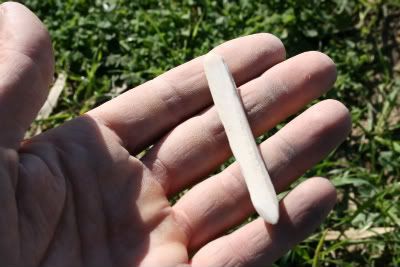
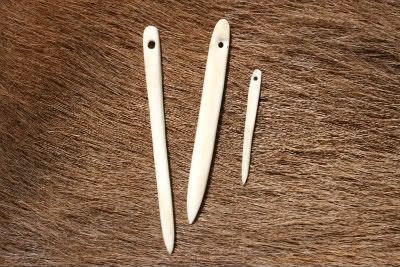
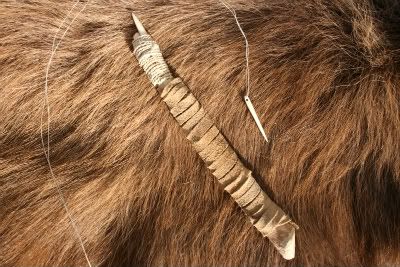
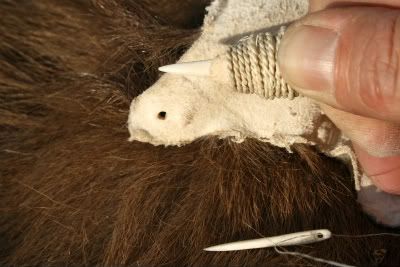
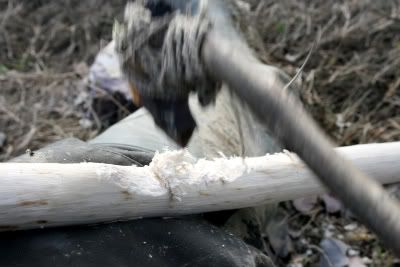
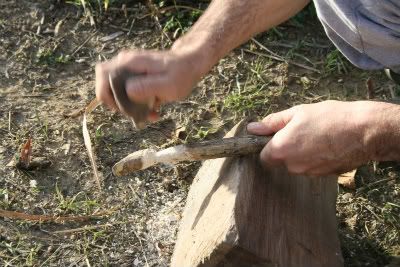
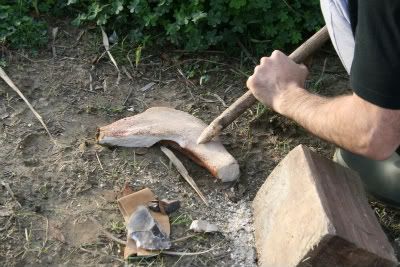
El hueso puede golpearse con un trozo de rama contra una piedra roma (foto 1) para obtener diferentes piezas que trabajar (foto 2). Usando una piedra porosa, se lijan dichas piezas (foto 3) hasta obtener los objetos deseados (foto 4). En este caso, hice tres agujas, aunque finalmente decidí usar la mayor de ellas, encajada en un trozo de madera dura y atada con cuerda de pita y cuero,  para hacer una especie de punzón (foto 5) que ayude a perforar la piel o el cuero  (foto 6) y facilitar así el trabajo de cosido.

Game meant much more than just the way to get food,  for primitive people. An animal provided many things for daily life: fur, fat, sinew and guts, blood and bones. Many tools were made out of bone: arrows, darts and spear points, scrapers, hammers and flakers ( for flinknapping), hooks and h, arpoons, awls, ornaments...
Bones can be hit with a log aginst a roundish stone (pic 1) in order to get different pieces to work with (pic 2). rubbing them against a porous stone (pic 3) till the wished tools are made (pic 4). This time, i made this three neddles, ad i finally decided to use the biggest one to make a sort of awl (pic 5) to help piercing the skin or leather (pic 6) to get an easier sewing.

jueves, 18 de marzo de 2010

Pita / Agave


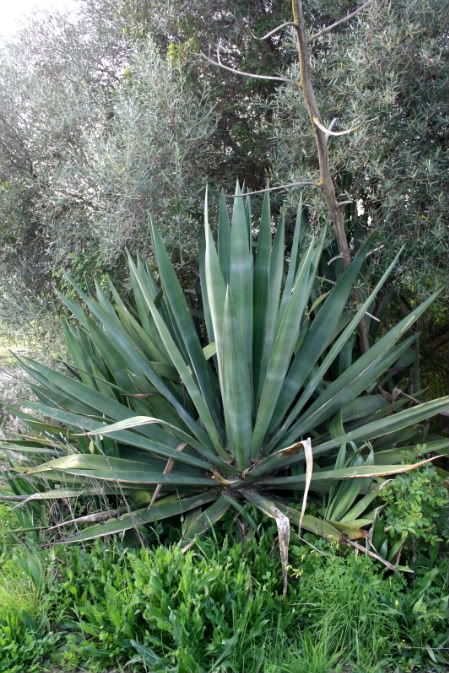
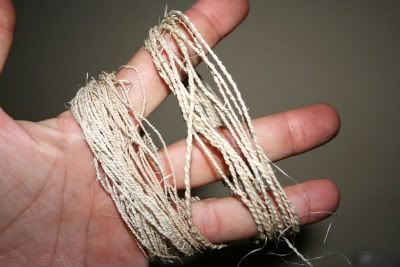
La Pita es una planta originaria de México e introducida en Europa probablemente por los españoles y portugueses. Aquí, en el sur de España, esta planta crece sin problemas, adaptándose al clima seco y soleado. Esta planta tiene multitud de usos; de ella se extrae licor, se hace papel, los tallos se pueden usar como madera ligera, y sobre todo se extrae una fibra excelente para la fabricación de cuerdas. Me encanta esta planta. Se encuentra fácilmente y en cualquier época del año, puedes cortar una de sus hojas (pencas) y obtener un buen puñado de fibra de buena calidad. Y me encanta hacer cuerdas con esas fibras.

Agave was brought to Europe from America probably for spanish an portuguese people. Here in the sout of Spain, this plant grows well with this dry and warm weather. There are plenty of stuff you can get from this plant; licour, paper, light wood and fiber to make good quality cordage, I love this plant. You can find it quite easily and on any given season, you can cut a leave and get a nice handfull of fiber. And i do love to make cordage with that fiber.


Hoy quise probar si haciendo una cuerda bien gruesa torsionada (no trenzada) podría hacer fuego con el arco varias veces. Ya había probado con una cuerda trenzada, pero sólo aguantó para obtener una brasa. Y para mi satisfacción la cuerda ha aguantado bastante bien en varias ocasiones sin partirse. Me encanta esta planta ¿lo he dicho ya?

I decided to try to make a quite thick string today to test it with the bow to make fire by friction. I tried it before, but then, the string was a platted one, and i just could get a coal. This time, i was happy to realice that the string stood for a few times and is still on. I love this plant. Did i mention it?


domingo, 28 de febrero de 2010

Hacha de piedra / Stone axe


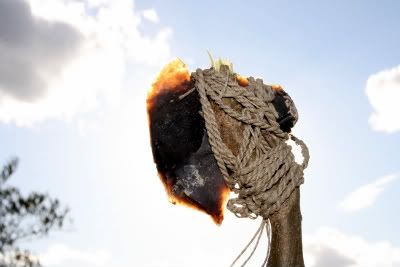
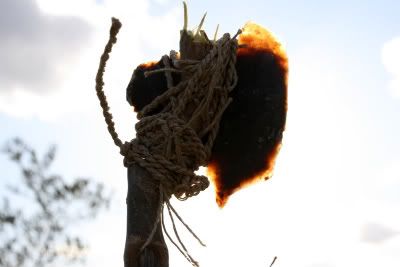
El otro día, mientras hacía mi primer cuchillo Hoko, cogí una lasca de silex grande de la montaña que empiezo a hacer con deshechos reutilizables y retocándola un poco (muy poco, como puede verse) y con un trozo de rama de granado hice este pequeño hacha. Abrí un poco la parte superior de la rama y acoplé la hoja, sujentándola con cuerda de cáñamo.

Few days ago, while making my first Hoko knife, i took a big flake from my`pile of broken and still usefull flint and working a little bit on it (just a little bit, as you can see) and with a piece of pomegranade as a handle i make this little axe. I opened a bit the top of the branch and fitted the flake there, tying it with hemp rope.

Días de lluvia y un refugio / Rainy days and a shelter


Ha llovido muchísimo las últimas semanas. Demasiado para esta zona. Cuando el tiempo ha dado un respiro, es agradable salir y hacer algo fuera.
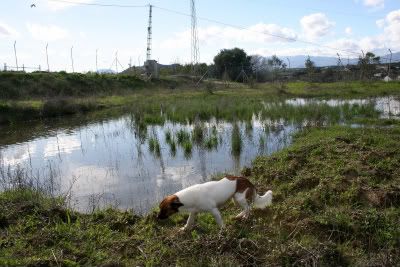
Al fondo de nuestro terreno, arcilloso e incapaz de absorver tanta agua, se ha formado una pequeña laguna, a la que acuden animales (ranas, garzas, conejos, ratas...) y plantas (esta mañana he descubierto juncos creciendo en ella)

It  rainned a lot lately. Too much for this area. When you get a break, it is nice to go outside and do something.
At the botton of our plot; clayey and unable to get that much water, a little pond has been formed, which helps some animals to come around (frogs, herons, rabbits, rats...) and plants (i was glad to see some cattail this morning)


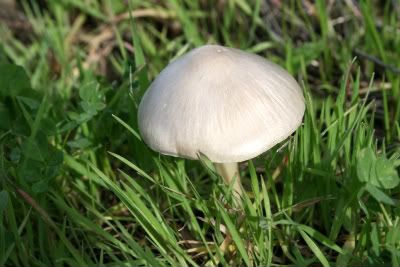
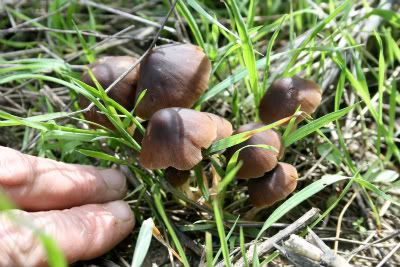
Otras especies que agradecen el agua son las setas y hongos. No sé diferenciar los comestibles de los tóxicos, pero aún así me agrada verlos salpicando el terreno.

Some other wildlife that are happy with the rain are mushrooms. I don´t know the difference between the edible  and the toxic ones, but still i like to see them.


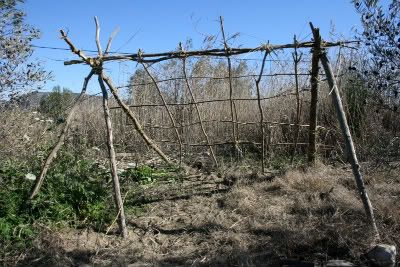
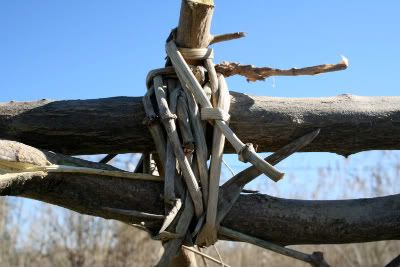
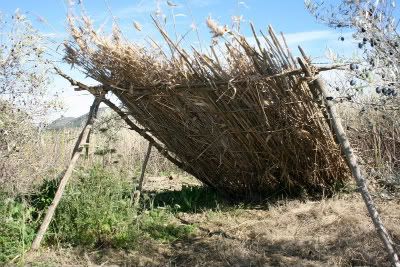
Uno de los días en los que el tiempo dió tregua, decidí usar unas ramas de granado y palos de pita que tenía por ahí, para hacer un refugio (muy básico). El problema fué que los palos de pita estaban casi podridos y los use como pilares para aguantar toda la estructura. Con la lluvia, estos terminaron por ceder y el refugio sólo aguantó unos cuantos días, antes de ceder y tumbarse. Pero de todo se aprende. Me gustó sobre todo el hecho de que pude utilizar la misma caña con la que más tarde haría el techado, como cuerda.

One of those days that was a bit sunny i decided to use some pomegranade branches and agave stalks to try to make a (very basic) shelter. The problem was that these were alredy quite old and rotten and i used them as posts to hold the whole thing. With the rain, they ended up giving up and the everything went down. Anyway you always learn from your mistakes and i was glad to discover that i could use the same cane that later wuold be used for roofing the shelter, as cordage.


sábado, 27 de febrero de 2010

Propulsor Prehistórico / Atlatl


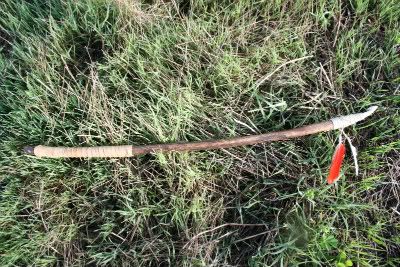
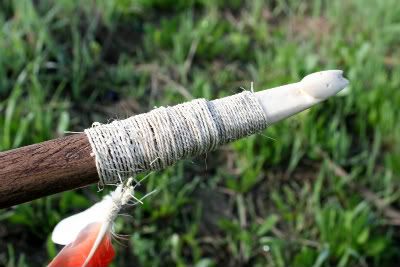
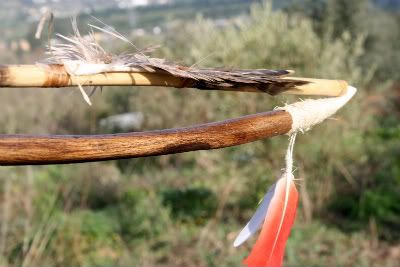
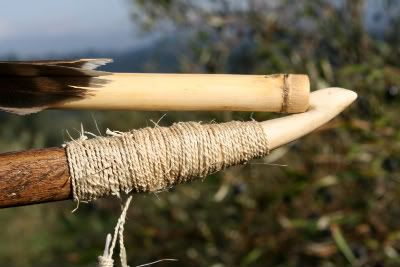
Mi último propulsor, hecho con madera de almez (Celtis australis) y asta de ciervo tallado, atado este al cuerpo del propulsor con fibra de pita.

My last atlatl made out of  hackberry (Celtis australis) and deer horn tied using agave cordage.

Cuchillo Hoko / Hoko knife


Hace unos días decidí hacer un cuchillo Hoko. El original fué encontrado en una excavación arqueológica carca del río Hoko, en Washington y tiene una antigüedad de 2.700 años( http://www.primitiveways.com/pt-hoko.html)
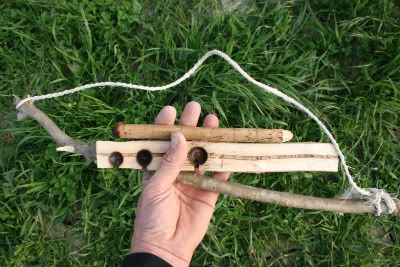
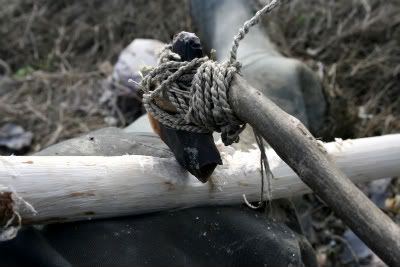
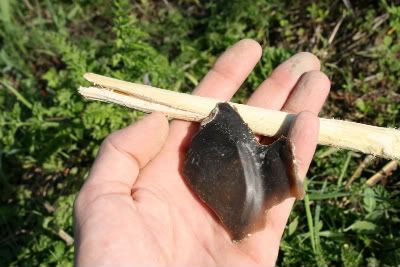
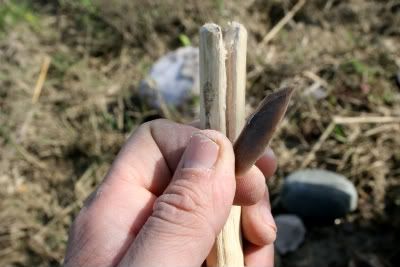
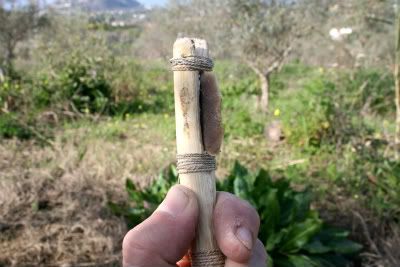
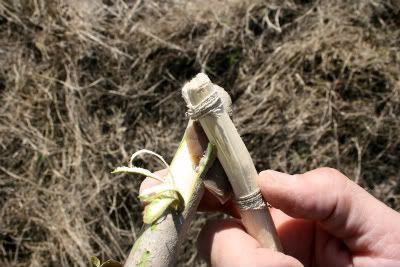
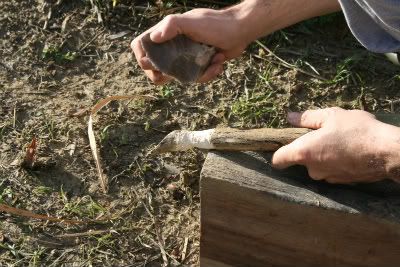
Con una lasca de silex he abierto un trozo de rama de acebuche, donde se inserta la "hoja" del cuchillo (una pequeña y afilada lasca de silex). Se atan fuertemente los extremos próximos a la hoja (en este caso he usado cuerda hecha con fibra de pita) y ya tenemos nuestro cuchillo Hoko.
Desde luego, no es este un cuchilo destinado a grandes trabajos, pero puede defenderse bastante bien con pequeñas tareas y seguro que vá bien para limpiar pescado o pequeños animales.

A few days ago i decided to make a Hoko knife. The original one was found in an archaeological excavation near Hoko river in Washington and has been dated 2.700 years old (http://www.primitiveways.com/pt-hoko.html)
Using a piece of flint i cut a branch of wild olive tree lengthwise. There, i set up the "blade" (a small and sharp flint flake). Then i tied both ends proximal to the blade (in this case i used hand made agave cordage) and our knife is done.
Of course this is not a knife for big jobs, but i found that it is actually quite usefull for small jobs and i´m pretty sure it could do well gutting fish or small game.

domingo, 24 de enero de 2010

Cerámica primitiva / Primitive pottery


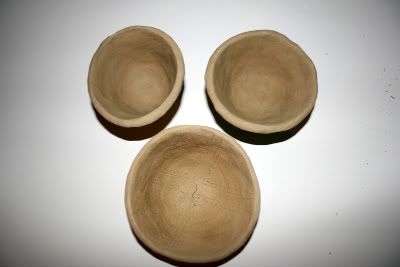
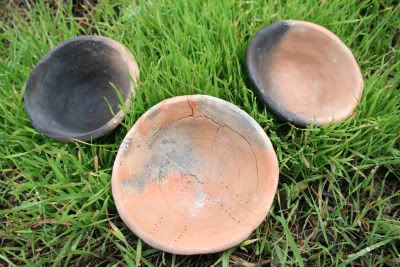
El Neolítico significa un gran cambio en el hombre prehistórico. Se vuelve sedentario, comienza a producir (deja de ser cazador-recolector), aprende a producir útiles pulimentados y es en este período cuando aparece la cerámica, que data de hace unos 8.000 años, generalizándose su uso por todo el mediterráneo hace unos 6.000. Se mezcla la arcilla con materiales desengrasantes (arena, conchas y huesos triturados, cuarzo...) para producir recipientes para conservar y almacenar la producción de alimentos.
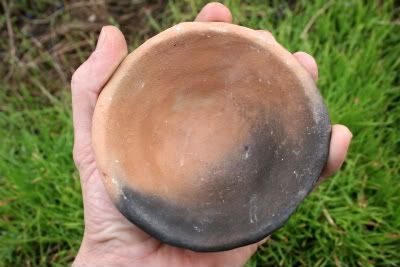
El terreno donde ahora vivimos es bastante arcilloso y quería comprobar si esa arcilla serviría para modelar algo de modo primitivo (sin torno) y cocerlo para obtener algún cuenco. Temía que simplemente se agrietase y se rompiera al cocerlo. Y así fué con mi primer intento. Mientras se secaba, preparándose para la cocción, se empezó a agrietar. Así que comencé una nueva masa a la que, esta vez, añadí más arena de río e hice dos nuevos cacharros. Los dejé secar y me decidí a cocerlos. Para mi sorpresa ninguno de los cacharros se rompió; incluso el que estaba agrietado resistió la cocción. Ahora me arrepiento de no haberlos decorado, pero bueno, estoy satisfecho con el resultado. Me gusta el aspecto primitivo que tienen, con diferencias de color.

Neolithic meant a big change for prehistoric men. People became sedentary, they began to produce ( they are no longer hunters-gatherers), they started to pulish their tools and is then when ceramic appear, dating back 8.000 years, spreading through the mediterranean back 6.000 years. Clay is mixed with sand, crushed bones or shells, quartz... in order to make containers to keep food.
The plot were we are living now is quite clayey soil and i wondered if i coud use this clay to make some primitive pottery. I was affraid that it would be no good for this matter and that the pots would just break. that´s what happened with my first attempt; while drying, my first bowl showed a few cracks...no good!. Anyway, i tried with two new ones, adding more river sand to the mixture, and fired the three of them. Surprisingly none of them broke and even the one with the cracks standed the firing process, and i´m quite glad with the result; those different colours make them look quite primitive. I like it.

domingo, 10 de enero de 2010

Palo arrojadizo / Rabbit stick


En esta tarde lluviosa y fría uno no puede hacer mucho fuera, así que he decidido terminar mi "rabbit stick".
Los "rabbit sticks" (o "boomerangs que no vuelven") se han usado desde hace miles de años en los cinco continentes como arma de caza para animales pequeños. Al más antiguo que se ha descubierto, hecho en madera, se le ha datado con una antigúedad de 8000-10.000 años. Todavía hoy se usa este arma por nativos de algunas áreas.
El palo arrojadizo está diseñado para volar en línea recta y la forma curvada le dá un movimiento de rotación que lo vuelve un arma muy efectiva.
Este que muestro lo hice a partir de un trozo de rama seca que me traje de Normandía (si, el tipo del scanner en el aeropuerto tuvo que alucinar), pero desconozco el tipo de madera que es.

It´s a rainny and cold afternoon and one cannot do much outside, so i decided to finish my rabbit stick.
Rabbit sticks (or non-returning boomerangs) have been around for a long while, and were used in the five continents as a little game hunting device. The oldest wooden throwing stick they found has been dated 8.000-10.000 years. Still today this weapon is used by natives of some areas.
The throwing stick is designed to fly in a straight line and the curved shape gives a rotation movement that makes it to became a very effective weapon in the right hands.
This one i show is made from a piece of a branch a found in Normandy ( yes, it travelled in my baggage...I would have loved to see the guy´s face at the airport´s scanner) but i couldn´t tell what type of wood it is.

viernes, 8 de enero de 2010

Cortando con piedra / Cutting with stone


Hace unos días me propuse hacer una herramienta muy simple, quizás una de las primeras herramientas que utilizaron nuestros antepasados remotos: un simple palo con punta afilada (para usarlo para escarvar en busca de raices o pequeños animales, o como arma de ataque-defensa). Para ello quise usar otro útil bien simple (también de los primeros que se usaron): una piedra con una arista afilada debido a una rotura.
Una vez que hemos conseguido dar un forma más o menos puntiaguda al palo usando la piedra como hacha de mano, lo pasamos por el fuego para endurecerlo y para facilitar el lijado. Este, es posible hacerlo frotando la punta enérgicamente contra una piedra porosa hasta conseguir el resultado deseado.
Un útil parecido a este (un palo afilado) fué usado por los neandertales por miles de años como herramienta básica en su supervivencia.
Few days ago i decided to make a quite simple tool, perhaps one of the very first tools used by our ancesters: a stick with a sharp point (to use it as a digging stick to get some roots or small animals or as a weapon ). In order to get that, i used another basic tool: a stone with a sharp side due to a breakage.
Once we get the pointy shape in the stick using the stone as an hand axe, it is heated on fire to get it hardened and easier to sand. This is done rubbing the point with a porous stone till the point is right.
Tools like that (a sharp stick) were used by neanderthals for thousands years as a basic survival tool.

lunes, 4 de enero de 2010

Bosques de Normandía ( Francia) / Normandy´s forest (France)

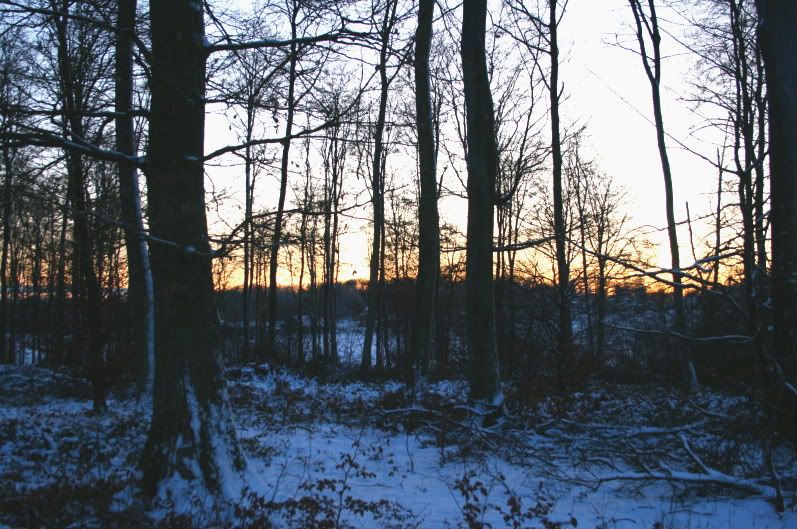
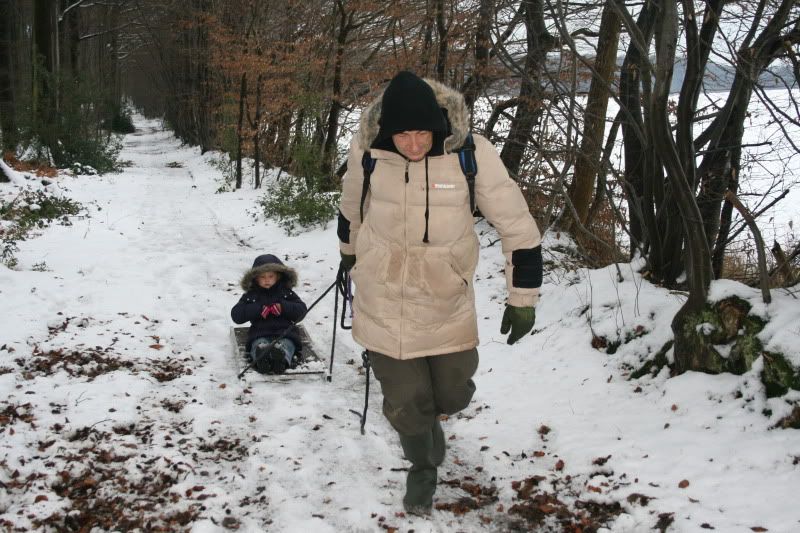
Las pasadas Navidades las pasamos en un pequeño pueblo rodeado de bosque en Normandía. Este año la nieve se adelantó (normalmente nieva aquí en febrero-marzo) y pudimos disfrutar de un paisaje precioso.
Para alguien que viene del sur de España, los árboles aquí parecen gigantes y la vegetación frondosa y muy verde (aunque para apreciar bien esto hay que visitar el bosque en primavera-verano).

Además hay abundancia de animales. En esta semana, vimos varios ciervos y zorros. Si tienes suerte te puedes encontrar además con jabalíes o alguna rapaz. Aún sin verlos, la nieve es un sitio perfecto para observar los rastros que delatan su actividad en horas de poca luz.
Otra cosa que me llamó la atención es el hecho de que cualquier piedra con la que te tropieces aquí es silex (material muy escaso en la zona donde vivo en el sur de España). Así, en un mismo lugar, tenemos madera y silex para la confección de útiles y además hay abundancia de caza. No es dificil pues imaginar a grupos de nuestros antepasados sacando provecho de todos estos recursos para sobrevivir en este entorno.

Last Christmas we spend our hollydays in a little village surrounded with forest in Normandy (France). Snow came early this year (usually not before febrery-march) so we could enjoy a beautifull landscape.
Being from the south of Spain with its tipycal mediterranean forest of low trees here they seem
to be huge and in spring-summer everything is deep green. I love it.

Walking in the forest we saw several deer and foxes, and if you are lucky you could also see wild boar and some birds of prey. The snow is also a wounderfull place to see the tracks of those animals you cannot see on daylight.
Something that i found amezing was the fact that almost any stone you found on your way was flint (very rare in the area i come from). So in the same place we got plenty of wood and flint to make tools and plenty of game. It´s not hard, then, to imagine groups of our ancestors using all this natural resourses in order to survive.

martes, 29 de diciembre de 2009

Bramadera / Bullroarer


Últimamente ha habido bastantes cosas que me han mantenido ocupado y sin tiempo para mi afición de chapucillas cavernícola; lo principal es que nos hemos mudado a nuestra nueva casa en el campo, en la que hay mucho trabajo por hacer, pero que también facilitará que haga más cosas publicables en este blog. He tenido también exceso de trabajo y para colmo, la Navidad...en fin, que admito que he desatendido el blog bastante, pero espero poder empezar a retomarlo e ir haciendo entradas más frecuentemente.
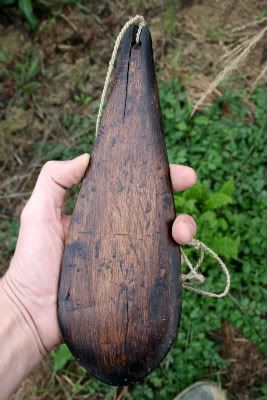
Lo último que hice antes de las vacaciones de Navidad en Normandía (y de las que en breve colgaré alguna foto) fué una bramadera; ese curioso objeto usado por numerosos pueblos primitivos que produce un sonido extraño y atrayente a la vez. Un objeto al que se le ha dotado de diferentes usos: para comunicarse con lo divino, para ceremonias de iniciación, como intrumento musical, como simple juguete o, como en mi caso, para terminar de convencer a mis nuevos vecinos de que el tipo de los palos y las piedras es, definitivamente, un tipo raro y, muy probablemente, un loco.
No deja de ser curioso que un trozo de madera plana atada a una cuerda y hecha girar sobre uno mismo produzca un sonido tan peculiar. En este caso no quise pulir demasiado la superficie ni tratar de disimular las grietas en la madera de naranjo...creo que esas imperfecciones la hacen más atractiva.

Lately there has been several things that have kept me busy enough: we have moved to our new home in the countryside ( which assures me a lot of extra work, but also more chances to make stuff related to this blog) Also at work, we had to do quite a lot of overtime and then, Christmas. Anyway, i know i haven´t updated this blog, but somehow i´ll try to managed to keep posting entries more often.
Last thing i made before my Christmas break in Normandy (pictures soon!) it was a bullroarer, that piece of flat wood tied to a string used by many primitive peoples that produces a strange and attractive sound.
Many posible uses has been given to the bullroarer: as a way to comunicate with the divine, for differents rituals, as a musical instrument, as a toy for children or, in my case, to definitly convince my new neighbors that the stones and sticks guy is quite weird and probably a nutter.